
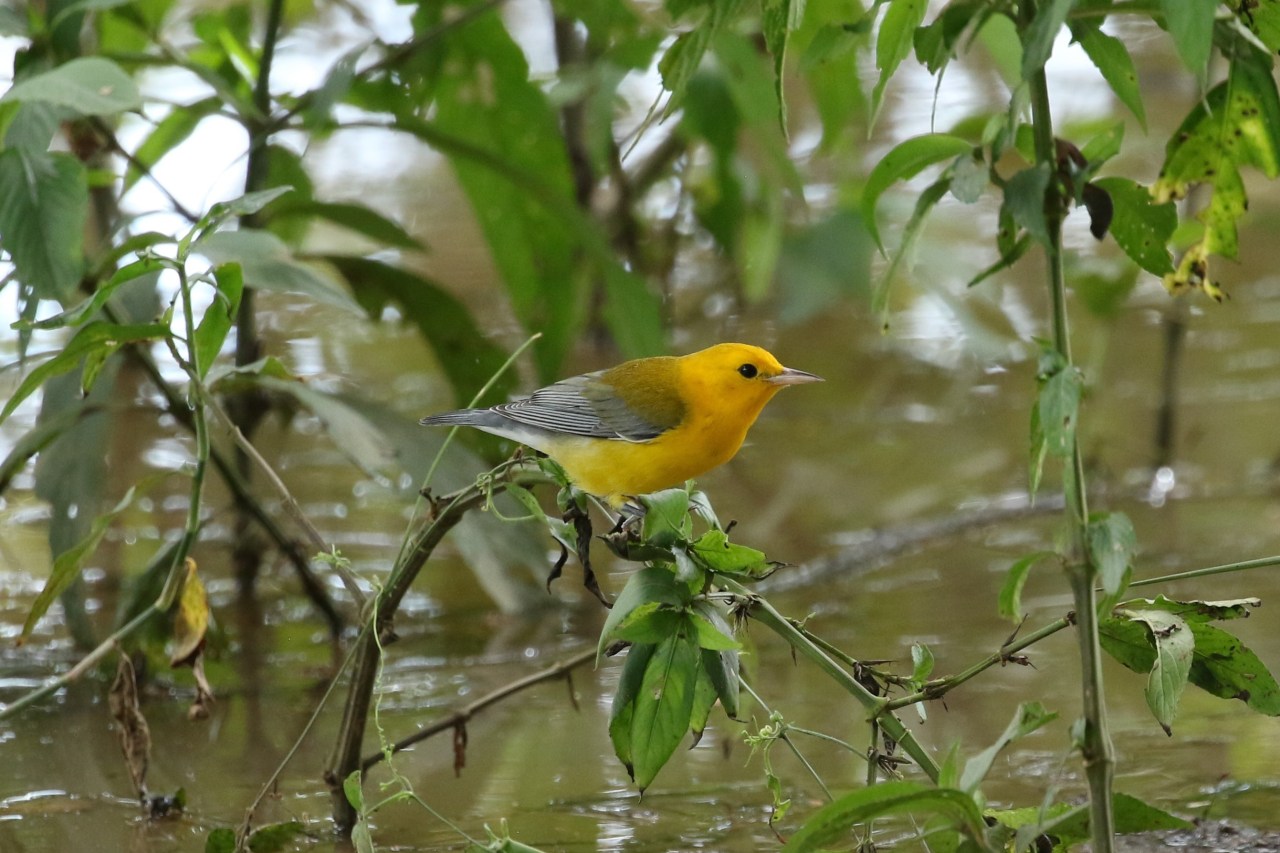
Prothonotary Warbler (Protonotaria citrea); Reinita cabecidorada; Paruline orangée; Zitronenwaldsänger
The Prothonotary Warbler is just one of the many migrant warblers that visit Costa Rica from North America. It is commonly recorded in Costa Rica in the lowlands but can also be found in our area to elevations as high as 1,500m. The following photos document in particular its feeding habits and were taken by friend John Beer at the Angostura Dam in October 2024.
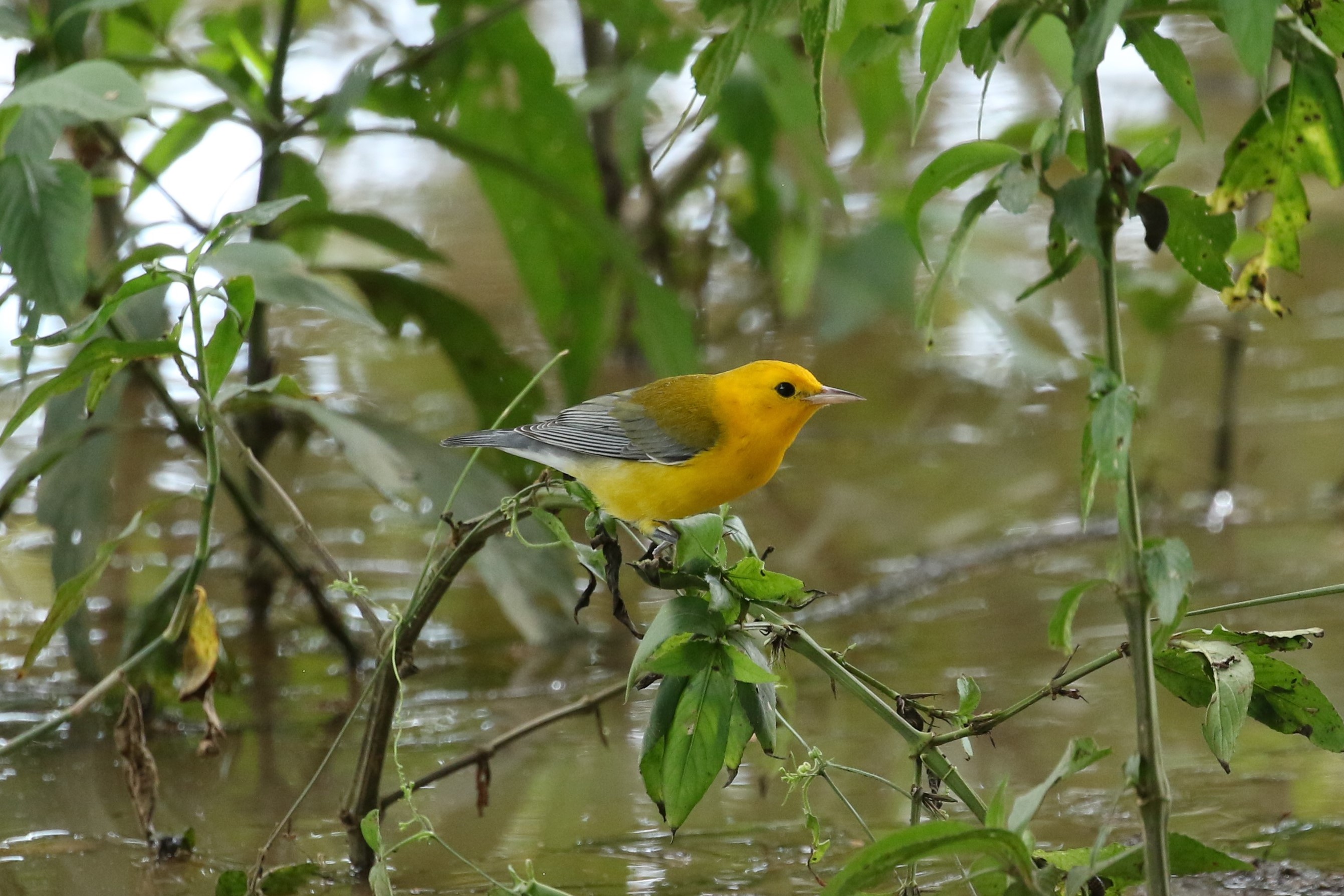
In several respects, this strikingly attired warbler is quite unique. Firstly, it is the only representative of its genus, Protonotaria. It is named for its golden plumage, said to resemble the colour of the robes worn by the notaries of the Byzantine court. It also is the only warbler species of Eastern North America that nests in cavities, both natural and artificial.

Compared to other warblers the Prothonotary’s tail, which features white spots, is relatively short while the bill is thicker than that of most of our other migrant warblers.
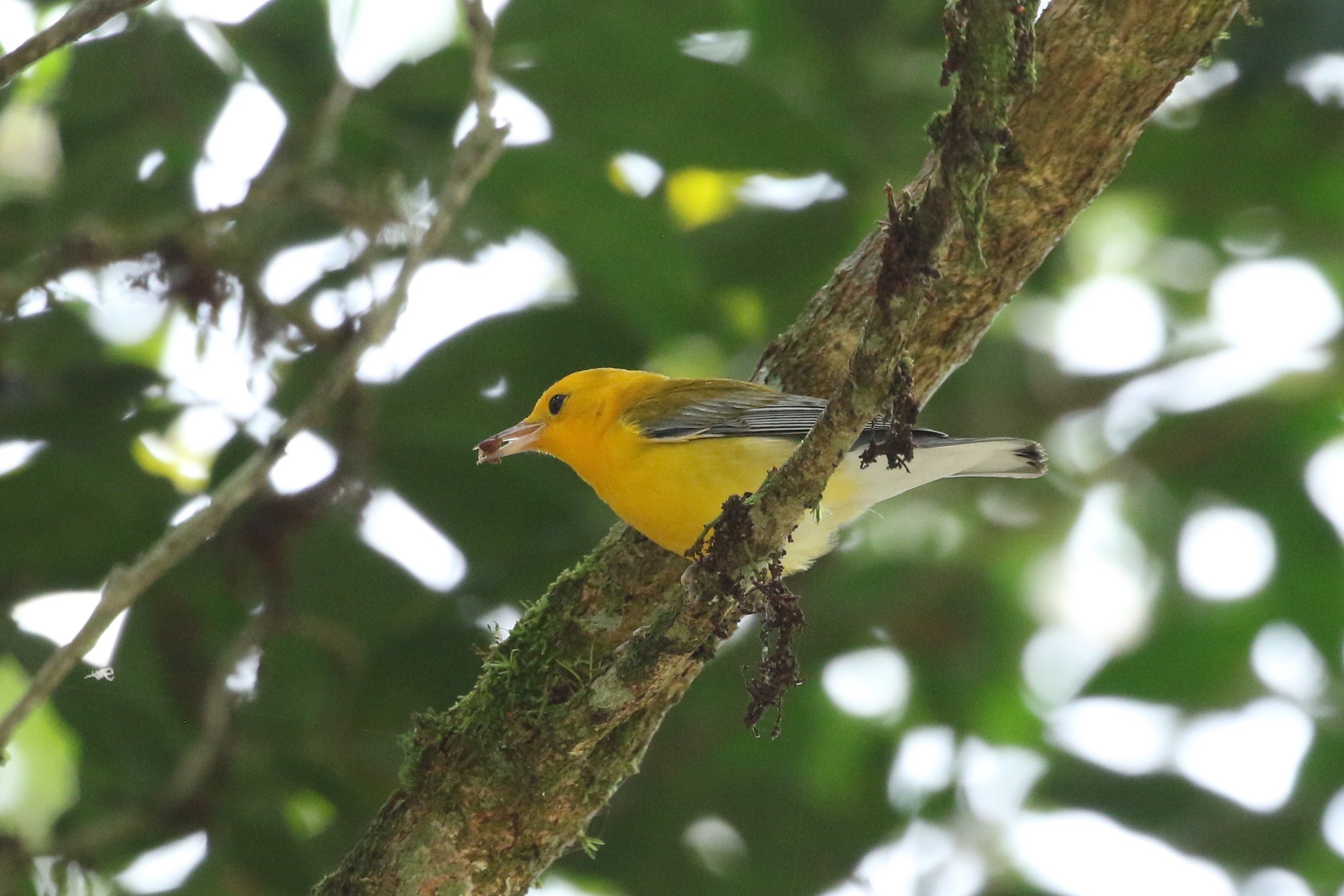
Although its diet is chiefly restricted to insects and their larvae (mostly aquatic), small molluscs, snails and spiders, this beautiful migrant does also eat some seeds. Its favoured habitat is generally restricted to river bottoms with areas of slow-moving or standing water. Indeed, my only sightings at San Antonio have been at my fish ponds. John Beer spent considerable time and patience attempting to identify what food source had piqued the interest of these two individuals at Angostura.
To his surprise John was able to note that at least one of them ignored worms or, – as in the first photo below – a spider, which it might easily have captured:


The sequence of photos documents quite clearly that most of the birds’ interest was centred on the surface of the water. This next shot gives a great view of the underside of the tail as this bird reaches vertically downwards towards the surface of the water.

Prothonotary warblers with a bright golden head are males. Female plumage is slightly more muted and shows a greenish wash on head and nape:


Finally, a nearby Green Heron (Butorides virescens) is perhaps holding in the tip of its bill one of the mysterious items that were on the menu that day. We invite further comments that might help clear up the mystery!
 Birds for Beer