
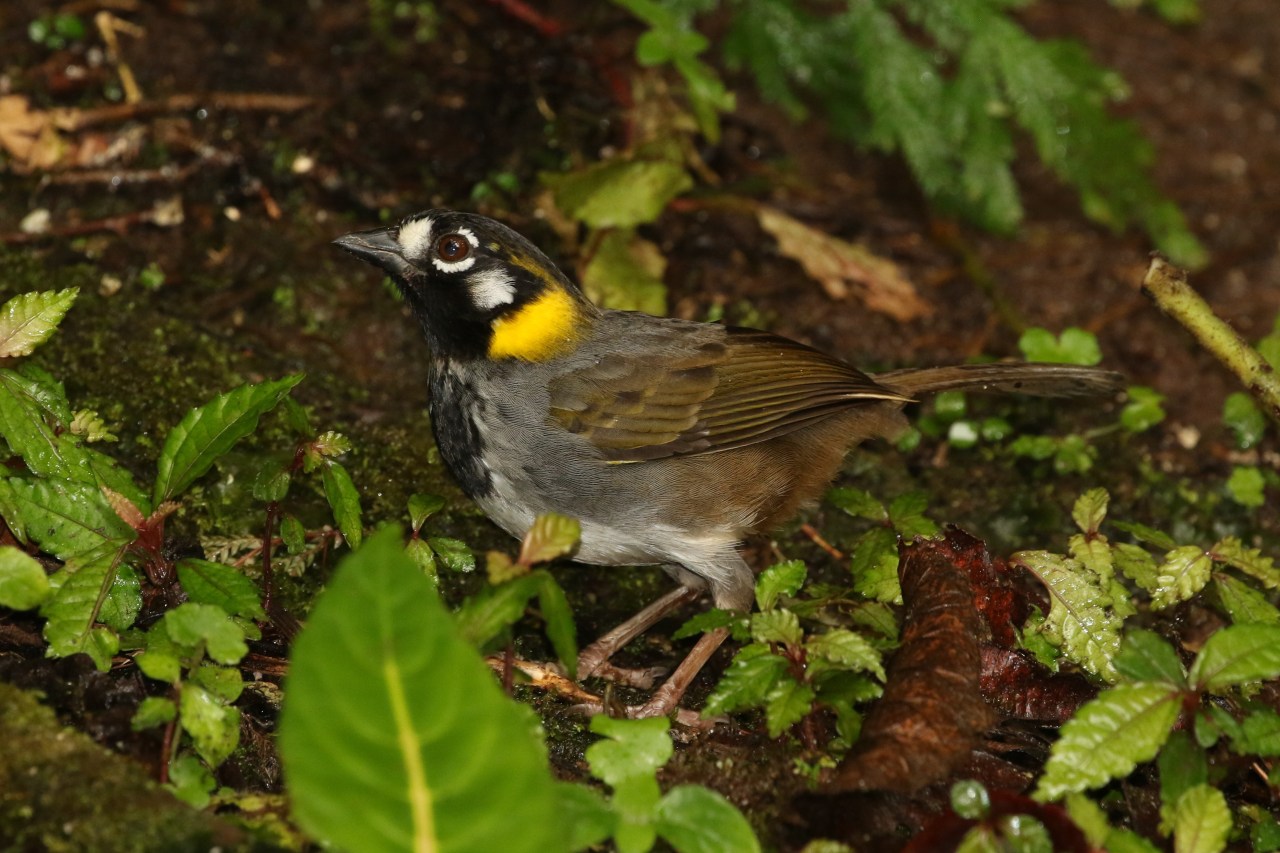
White-eared Ground-Sparrow (Melozone leucotis); Pinzón orejiblanco; Weißohr-Grundammer; Tohi oreillard
Multiple friends have come to the rescue! Here now we have the White-eared Ground-Sparrow as a follow-up to yesterday’s post on the endemic Cabanis’s Ground-Sparrow. As already mentioned, Costa Rica is home to just two ground-sparrow species and both of them share much the same restricted range in the country. Although the White-eared Ground-Sparrow can be found in other Central American countries, in our area there are actually far fewer sightings than of the near-threatened Cabanis’s. This is perhaps because visiting birders prefer to seek out the endemic cabani.
However, the White-eared Ground-Sparrow is a rather beautiful bird. With vivid yellow on the sides of the neck and splashes of white in front of and behind the eye – which in turn is clearly highlighted by a white eye-ring – it can be rather conspicuous even in its preferred shaded environments:

Although I have myself encountered the White-eared Ground-Sparrow at the ermita in the village, Aquiares is again the most reliable spot within easy reach of my house in San Antonio if you want to get a good look at this handsome bird. It is of good-size for an American sparrow, measuring 7″ on average compared with the 6″ length of Melozone cabani:
If you compare the next photograph with the very similar one of the Cabanis’s Ground-Sparrow from my preceding post, you may think that the locations are identical. And you might well be right! Puddles on dirt roads are attractive spots for many bird species for a variety of reasons.

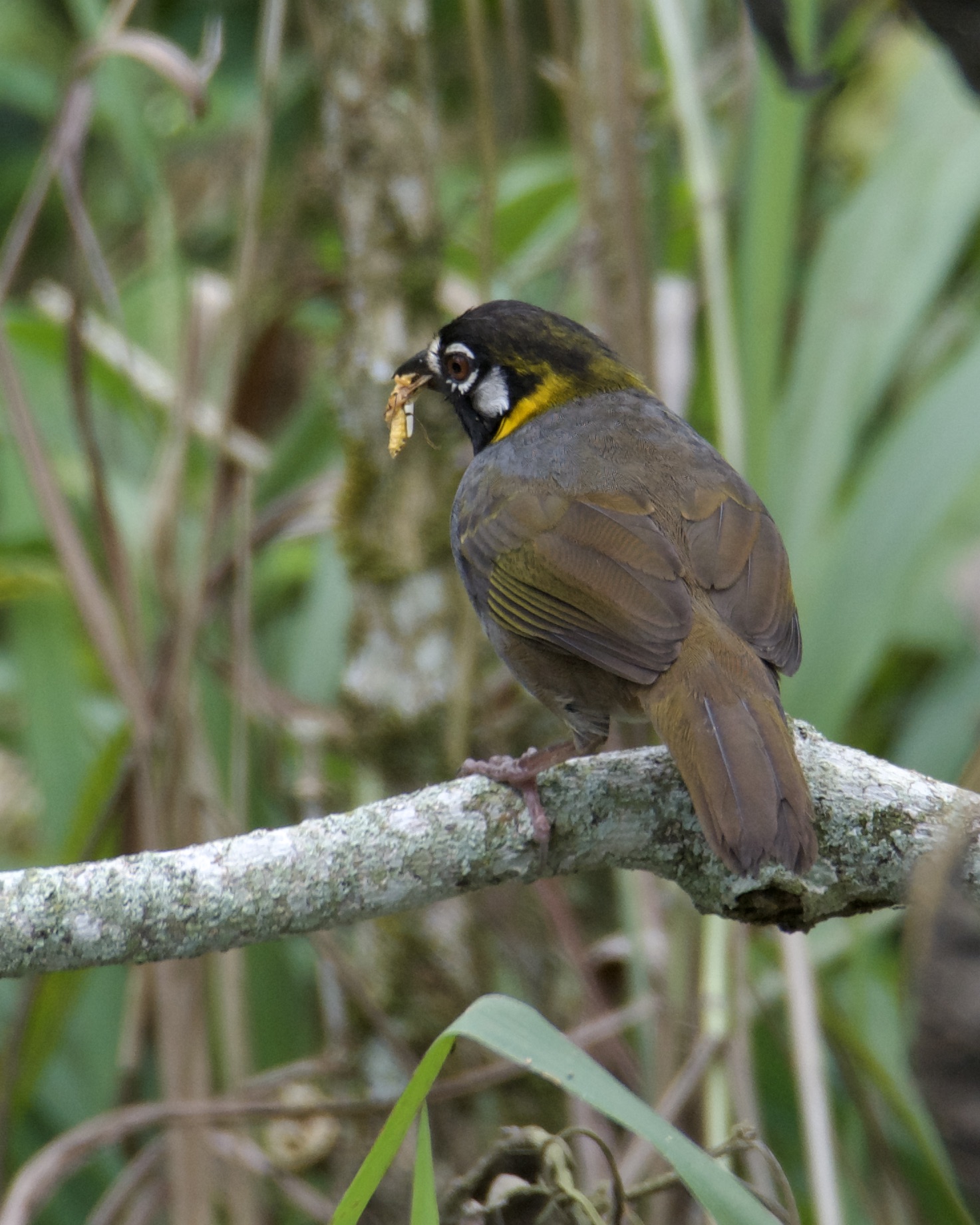
A favoured spot for many bird species, warblers especially, is the smelly pool near the Aquiares lagoon – unfortunately it has recently been ‘tidied up’. We hope for its rejuvenation with the passage of time. The individual below has snatched up a rather large insect. The distinctive head plumage stands out well despite the gloomy surroundings.

As with Melozone cabani, the White-eared Ground-Sparrow prefers middle altitudes in Costa Rica and consequently there are very few reports from either the coastal lowlands or the highlands. Here are the final images of this very pretty species courtesy of my good friends Larry Waddell and John Beer:


 Birds for Beer