

This post looks at just a few additional migrant warbler species. For guidance I begin with a list of some of our local sightings of migrant New World warblers (Parulidae) this autumn. Most of these occur regularly in our area – an asterisk* indicates rarer species:
- Ovenbird*
- Worm-eating Warbler*
- Louisiana Waterthrush
- Northern Waterthrush
- Golden-winged Warbler
- Blue-winged Warbler*
- Prothonotary Warbler
- Black-and-white Warbler
- Tennessee Warbler
- Yellow Warbler
- Mourning Warbler
- Kentucky Warbler*
- American Redstart
- Northern Parula*
- Cape May Warbler*
- Chestnut-sided Warbler
- Bay-breasted Warbler
- Blackburnian Warbler
- Yellow-throated Warbler*
- Townsend’s Warbler*
- Black-throated Green Warbler
- Black-throated Blue Warbler*
- Hooded Warbler*
- Wilson’s Warbler
- Canada Warbler*
An asterisk indicates rarer species that you would not easily encounter. The Hooded Warbler (Setophaga citrina) is considered uncommon, but this year several have appeared locally. The following image is a file photo taken at Guapiles in the Caribbean. We include it simply to show the striking plumage of the male. (All other photos in this post were taken this year in our local area.)

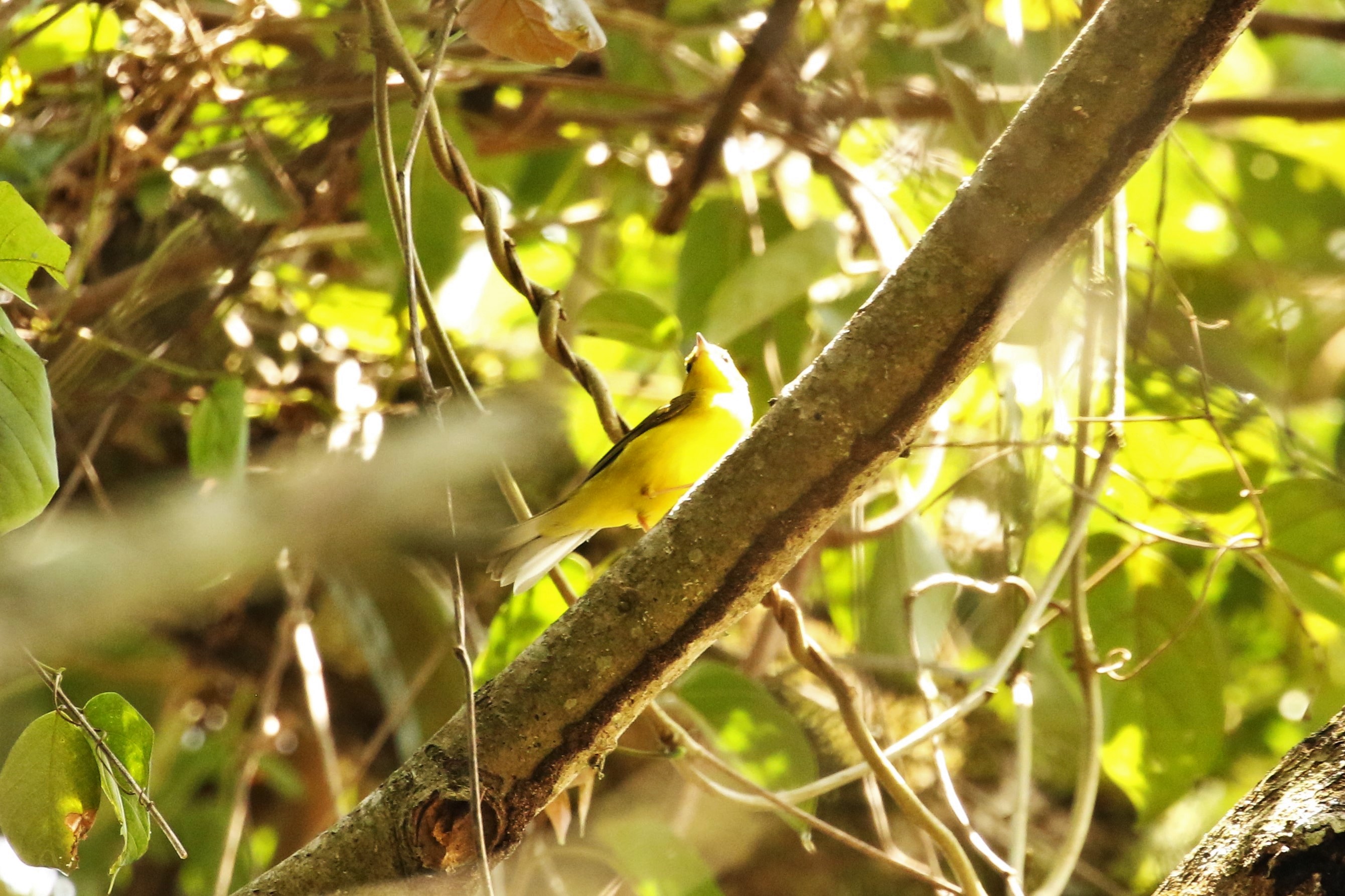
The female Hooded Warbler is a yellow bird, with mostly bright-yellow underparts; the black markings of the ‘hood’ are much less noticeable. The individual shown below was photographed fleetingly at Aquiares after being seen repeatedly for more than a week, beginning in mid-October of 2023. The clearly displayed white outer tail feathers are a diagnostic feature of Hooded Warblers, whether male or female. This individual is believed to be an adult female:
This year’s migrating Bay-breasted Warblers have been rather conspicuous in numbers. The Bay-breasted Warbler (Setophaga castanea) is a generally common migrant warbler. It usually occurs mostly in passage but with occasional individuals staying all winter in Costa Rica. In some years it seems to pass through in very large numbers:

Identification is not always easy. Compare the juvenile male below, which has just a mere trace of a ‘bay breast’:

The following uncommon, even rare species have also been seen this year but were not always able to be photographed clearly, despite best efforts:


And the following two species may be common for Larry Waddell up there in Minnesota, but they are scarce items in migration here in Costa Rica:
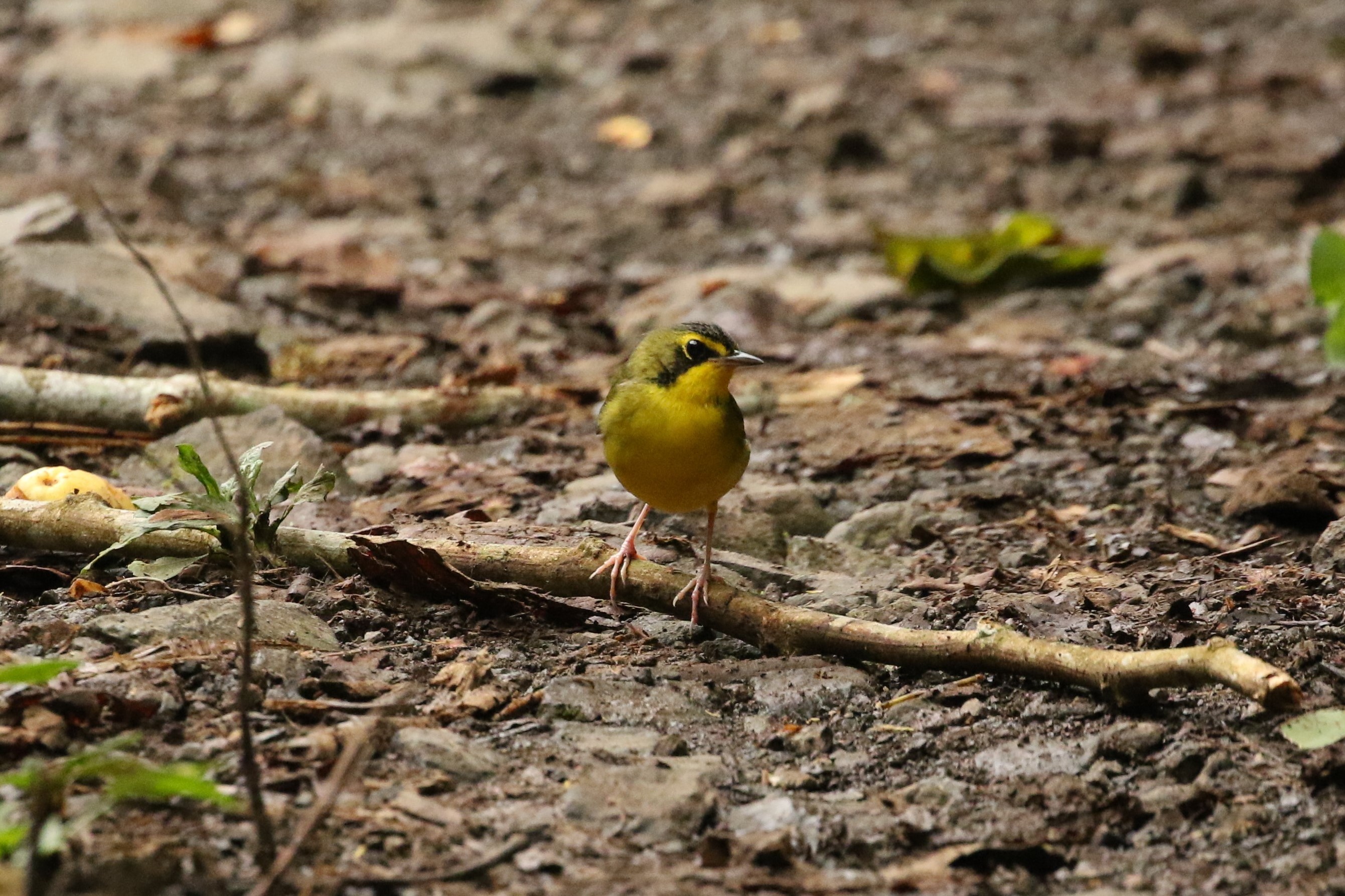
The only Kentucky Warbler to arrive in my own garden in San Antonio came some years ago and was promptly killed by a cat. I was left speechless at the frustration and vowed never to own a cat myself. Our final species for today is another male, this time a Nashville Warbler (Vermivora ruficapilla). This is a species that I was familiar with in Dallas, Texas, but which has still to my knowledge not appeared in San Antonio. Because of its eye ring it can be confused with one of our Costa Rican resident vireos, the Lesser Greenlet:

This year’s migration is still in full swing with many more great sightings sure to follow when most species head back north in the New Year.
 Birds for Beer
That hooded warbler sure is a beauty! Where are you now? Let’s have a char.
LikeLike