

Spotted Antbird (Hylophylax naevioides); Hormiguero moteado; Rotmantel-Ameisenwächter; Alapi grivelé
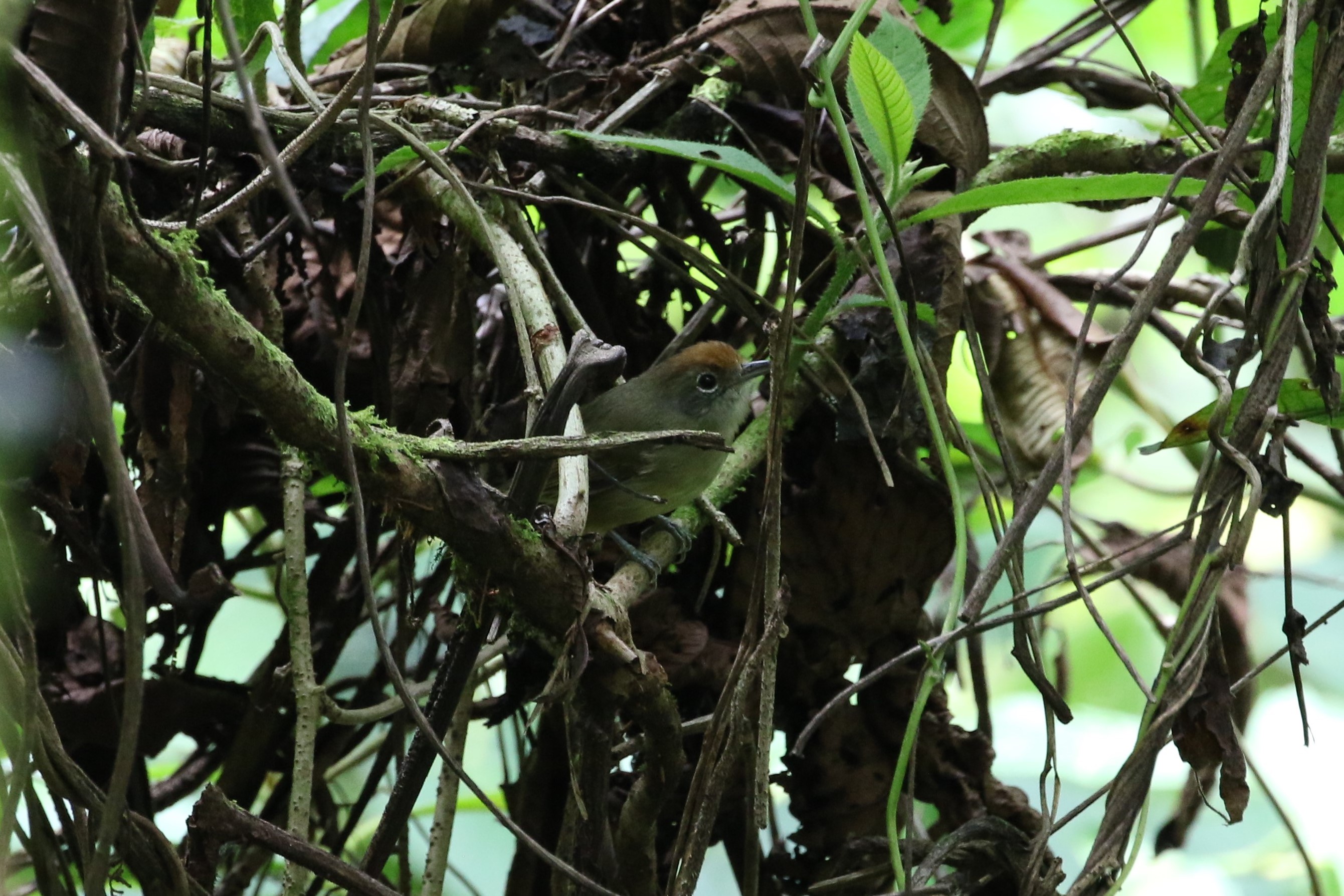
Plain Antvireo (Dysithamnus mentalis); Batarito cabecigris; Olivgrau-Ameisenvogel; Batara gorgeret
Antbirds are primarily forest birds of the Neotropics. In Costa Rica we have 22 different species and 19 of these can be found in the Turrialba area. In English, Costa Rican antbirds may variously be termed antshrikes (6 species), antvireos (3 species), antwrens (4 species**) or simply antbirds (8 species) . (**Note that the former Checker-throated Antwren has recently been renamed the Checker-throated Stipplethroat). Note too that antbirds follow ant swarms in order to consume prey that hastens to escape the dreaded ants, not, however, in order to feed on the ants.
The nearest easily accessible locations to my home that offer the necessary habitat are the Guayabo National Monument and the forested areas in and near the Aquiares coffee fields. However, the Espino Blanco private reserve near San Rafael deserves to receive much closer attention from the birdwatching fraternity as it too includes thickly forested habitat. And very close attention is indeed required since antbirds are generally small, unobtrusive, and dingily attired residents of thickly forested areas, where not much light can penetrate.
At first I despaired of finding any of them close to my San Antonio home, let alone of obtaining a decent photo. Thanks to friends John and Milena Beer and expert guide Steven Aguilar the situation is gradually changing. Here then is a very modest sample of just two antbirds that John has been able to photograph at the nearby Guayabo National Monument:
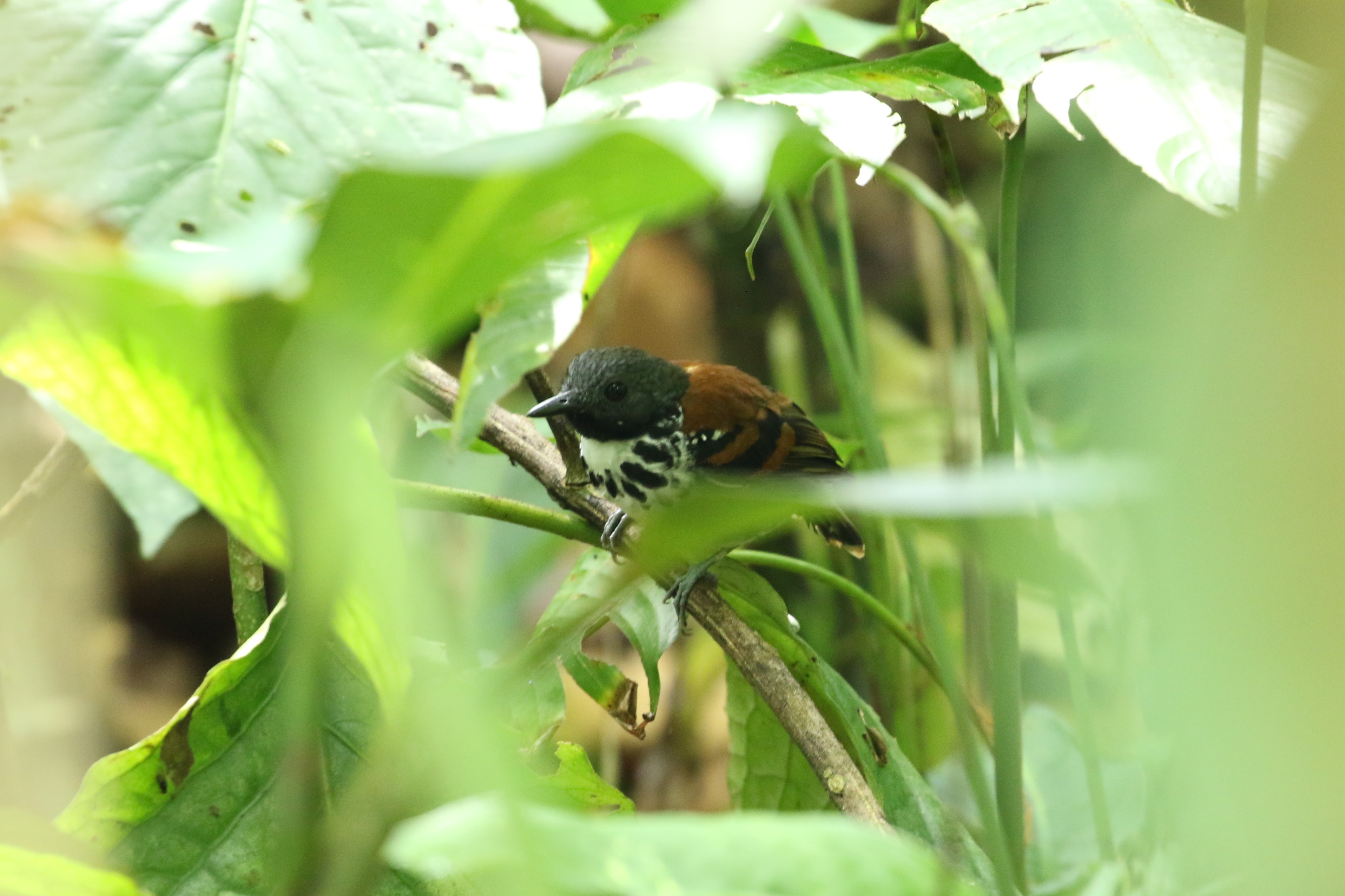
The Spotted Antbird, pictured above, is relatively easy to identify because of its spotted breast. This is particularly the case with the male bird, whose black spots stand out against the white throat and breast.
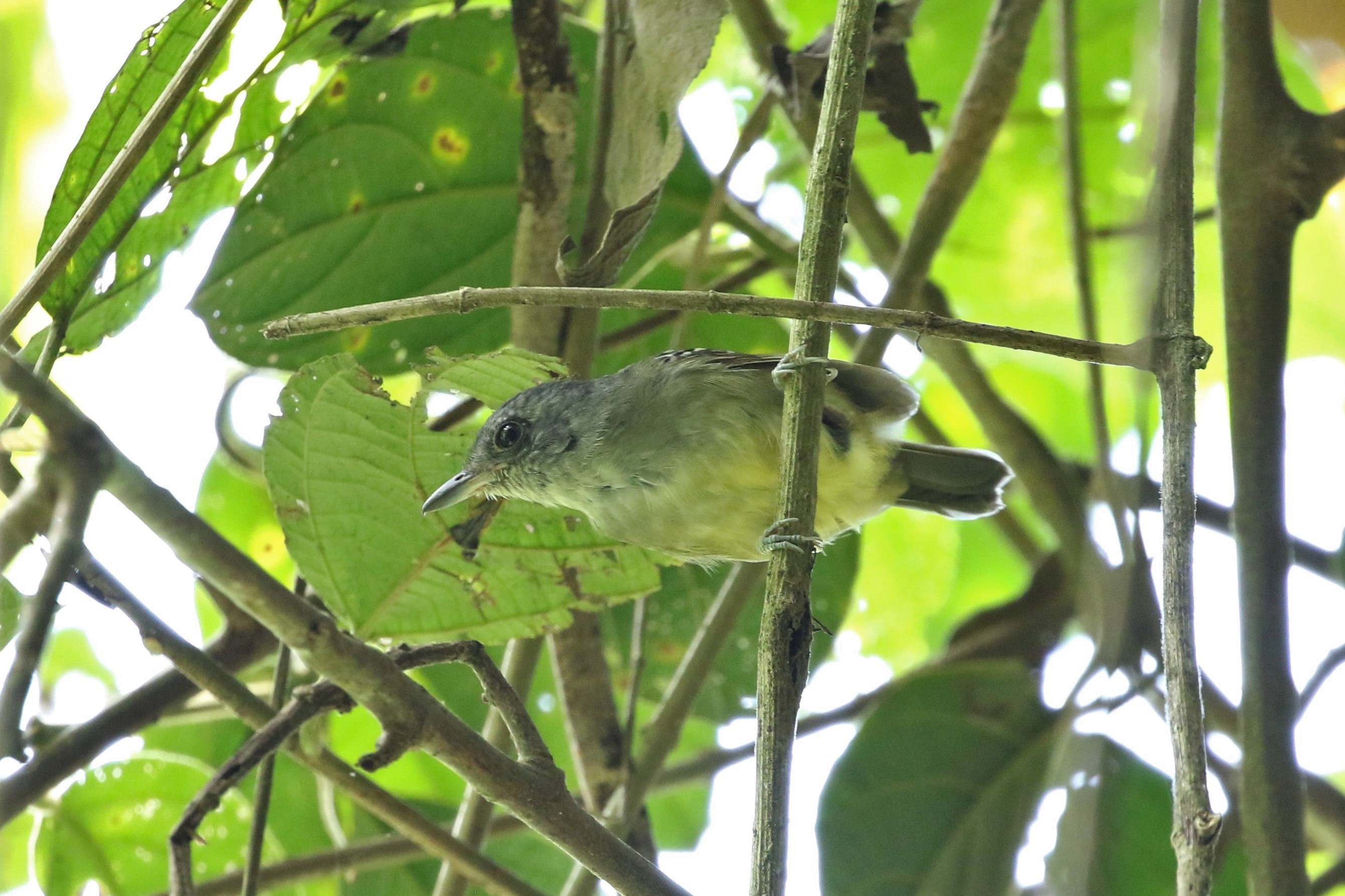
As its name indicates, with its generally dull plumage the Plain Antvireo is difficult to detect and even harder to distinguish from other small antbirds unless seen very clearly. It is actually a fairly common bird at middle elevations in the Turrialba area. The male is pale yellow below with distinct spotting on the wings, while the female sports a tawny crown similar to that of the Tawny-crowned Greenlet, a tropical vireo species also resident in our area.
Thanks to John, I have access to additional photos of these two antbirds, but he took these at other locations not close to home on the Turrialba Volcano slope. Here’s a really nice shot of a male Spotted Antbird that John found near the Arenal Volcano in the north of the country:

Finally, this female Plain Antvireo, tawny crown clearly visible, was glimpsed in thick vegetation near the Río Tausito, west of the Refugio de Vida Silvestre La Marta.
 Birds for Beer